Category: Seed Funding (SAFEs and Convertible Notes)
-
Seed Funding: Complete SAFEs vs Notes Guide
Table of Contents – Seed Funding: Complete SAFEs vs Notes Guide TL;DR: For most seed funding rounds, a post-money SAFE is the default because it’s fast, market-familiar, and makes dilution easier to estimate when you’re stacking multiple checks. Use a convertible note when a real maturity clock is part of the deal (for example, a…
-
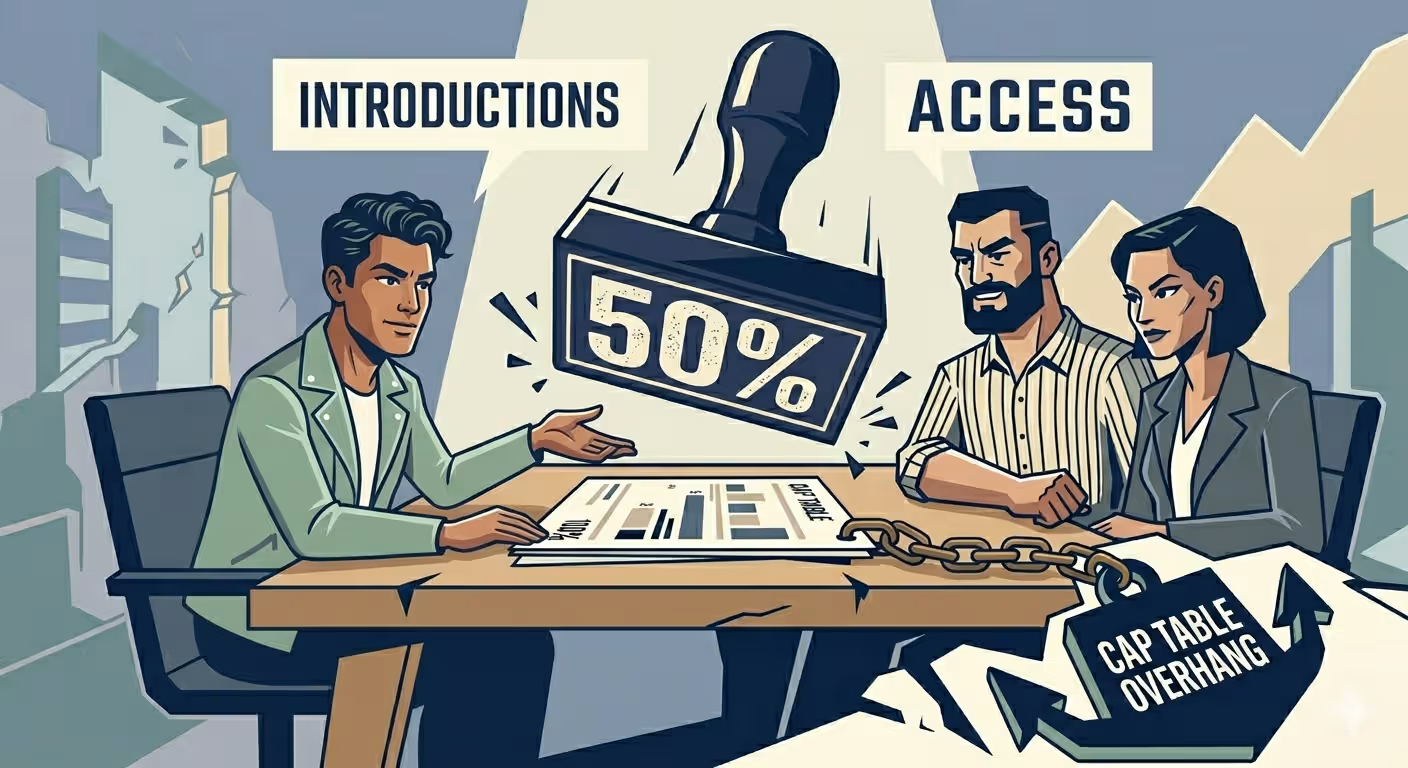
Venture Studio Taking 50% Equity for $0: Half Your Company for Promises
tl;dr: “50% for $0” is usually a brutal trade: you’re handing over permanent ownership to a venture studio for promised introductions + some operating help…often while the studio’s equity doesn’t vest. If they’re truly acting like co-founders, make them earn it via vesting/milestones. Otherwise, walk. They are trying to make you glorified employees. If you’re…
-

SAFE vs. Convertible Note: Leverage You Didn’t Mean to Give Away
If you’re raising a pre-seed or seed round and you’re choosing between a SAFE and a convertible note, here’s the short answer: pick a SAFE unless you want a maturity date (and the pressure that comes with it). In most venture financings, founders don’t “feel” the discount or valuation cap day-to-day. You feel the clock…
-

Accelerator Investments Should Be Convertible Equity
I previously wrote that accelerator documents should be easy. At the time, I focused on adverse selection: the more difficult the terms or onboarding process (including the investment documents), the more likely the best startups would choose a different accelerator or decide not to join at all. As the accelerator ecosystem has evolved, and after…
-

Convertible Note Maturity Date Terms
Convertible notes are a very common startup financing method. They typically include a maturity date, at which point the notes are, in theory, due and payable with interest. Convertible note maturity is often set 18 to 24 months after the first note investment. In practice, repayment at maturity is usually not a great outcome for…
-

How to Survive a Co-Founder Divorce while at an Accelerator
Accelerators can certainly help a startup reach new levels. But if the relationship between the startup’s co-founders is already on shaky ground when they enter, the only thing the accelerator (through no fault of its own) may accelerate is a co-founder divorce…and possibly the death of the startup. The Co-Founder Divorce Problem In a co-founder…
-

Accelerator Demo Days and General Solicitation
If you have been to accelerator demo days, you have probably seen a pitch that mentions a financing round in progress, or the details of a proposed round. In the last several years, some accelerators have worried that demo day presentations could be viewed as a general solicitation for purposes of Rule 502(c) of Regulation…
-

Crowdfunding Should Be Used as a Last Resort
I recently wrote a commentary piece for the Dallas Business Journal regarding equity crowdfunding titled: “Here’s Why Crowdfunding Should Be Your Last Resort” I thought some of my readers would enjoy it. Some of the main take-homes from the article are: (1) It may not provide the boon of capital some predict Even if a startup is…
-

Why Seed Round Due Diligence Should Not Start Too Early
Occasionally, early-stage investors will send a startup an extensive seed round due diligence request far too early, sometimes an 8+ page list, before they’ve made any real commitment to invest. That “too early” diligence request is problematic for a few reasons. By “extensive,” I mean requests that go well beyond basic founder diligence (a pitch…
-

Startups Should Invest in a Quality Scanner
When your startup goes through due diligence for an investment round or an exit, investor’s or buyer’s legal counsel will typically send a laundry list of document requests. These documents range from the startup’s bylaws to stock option agreements to third party contracts to prior financing documents. Quite often, these diligence materials are not readily…