Last Updated on May 1, 2026 by Ryan Roberts
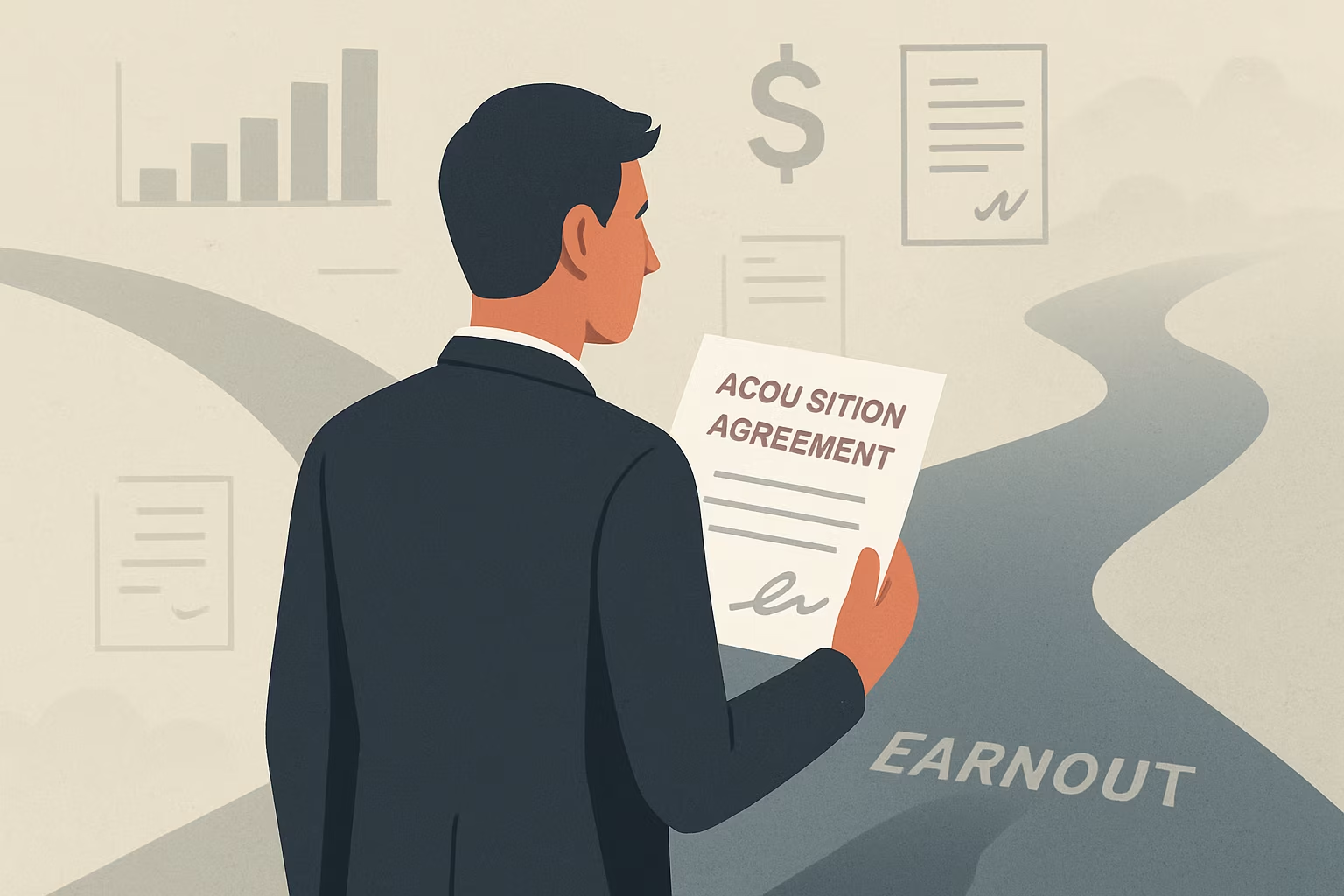
If you’re selling your startup and the buyer proposes an earnout, the short answer is this: earnouts are usually a sign of unresolved risk or disagreement, not free upside. Sometimes that risk really does need to be bridged. Often, it’s a warning light.
This matters most if you’re a founder selling a venture‑backed company where price, timing, and post‑closing control are already tight. Earnouts can work—but only in a narrow set of situations, and usually only if you understand what problem the buyer is actually trying to solve.
The biggest misconception is thinking an earnout is just “extra consideration if things go well.” In real M&A deals, it’s more accurately a way to shift execution risk back onto you after you’ve already sold the company.
Let’s unpack when an earnout provision actually makes sense, when it usually doesn’t, and how this plays out in real startup negotiations.
Why Earnouts Show Up in Startup Acquisitions
In practice, earnouts show up when the buyer and seller disagree on future performance, not current value.
You think the business is about to inflect.
The buyer thinks the projections are optimistic.
Rather than fight over price, the buyer says: “Let’s tie part of it to performance.”
That’s the theory.
In reality, earnouts are often used to solve one of three problems:
- Revenue durability risk – The buyer isn’t confident customers will stick post‑close.
- Founder dependency – The business relies heavily on you personally.
- Integration uncertainty – The buyer doesn’t know how the product will perform inside a larger org.
And in any of these risks, the buyer wants to have some mechanism to control price.
The Founder Assumption about the Earnout That Gets People in Trouble
Here’s the assumption I hear all the time in M&A discussions:
“If we hit our plan, we’ll get the earnout. We were going to do that anyway.”
That assumption ignores two things that matter a lot in actual deals:
First, you no longer control the company the same way after closing. Reporting lines change. Budgets change. Priorities change. Sometimes the buyer’s incentives quietly diverge from yours.
Second, earnouts are usually drafted around metrics you don’t fully control—even if they look objective on paper.
Revenue targets depend on pricing authority.
Product milestones depend on headcount approvals.
Customer retention depends on integration decisions you don’t make.
This is where theory and reality split.
Theory vs. Reality: How and Earnout Actually Performs
In theory, earnouts align incentives.
In reality, they’re closer to a delayed negotiation over value—with fewer levers for you.
In venture‑backed startup acquisitions, full earnout payouts are less common than founders expect. Partial payouts are more common. Disputes are common enough that sophisticated buyers draft aggressively around discretion and interpretation.
From a startup lawyer’s perspective, the risk isn’t that the buyer is acting in bad faith. It’s that the earnout becomes subordinate to the buyer’s broader business goals, which is exactly what they paid for.
This is why many experienced founders treat earnouts as contingent consideration they should discount heavily, not upside they rely on.
Typically, earnouts are either “remote” possibility of achievable, or they are a virtual layup. Most founders have a good sense about whether they’ll achieve the earnout.
When an Earnout Actually Makes Sense
Despite all that, there are situations where an earnout provision is reasonable.
The cleanest case is early‑stage or pre‑revenue technology where value is genuinely tied to near‑term milestones that both sides agree are achievable and measurable.
Another is where you’re intentionally rolling into an operating role post‑close and want part of your economics tied to continued performance—effectively blending acquisition consideration with compensation.
Earnouts can also make sense where:
- The earnout period is short (12–18 months)
- The metrics are simple and binary
- You retain meaningful operational authority
Those conditions are rarer than they sound, but when they exist, earnouts can be a rational bridge.
Where Stage and Leverage Change the Answer
Stage matters a lot.
In early startup acquisitions, earnouts are more common and more tolerated because uncertainty is real and price sensitivity is high.
In later‑stage or growth‑equity‑backed exits, earnouts usually signal leverage imbalance. If you have competitive tension or a strong standalone business, buyers typically solve valuation gaps with price—not contingencies.
Market conditions matter too. In softer M&A markets, earnouts show up more frequently because buyers are cautious and capital discipline tightens. That doesn’t mean you should treat them casually.
What Founders Over‑Optimize (and Why It Rarely Helps)
Founders often focus intensely on the percentage of the earnout or the headline target number.
That’s usually the wrong lever.
What matters more is:
- Who controls the inputs
- How disputes are resolved
- Whether the buyer has affirmative obligations to support the earnout
In real M&A negotiations, small drafting choices around discretion and operational support often matter more than the nominal earnout size.
The Practical Takeaway
If you remember one thing, remember this:
An earnout is not free upside—it’s deferred risk.
Sometimes that risk is worth taking. Often it should be discounted heavily in your mental math. If the earnout is essential to the deal, focus less on the headline number and more on whether the structure gives you a fair shot.
And if the buyer won’t move on price but insists on an earnout, that’s useful information about how they’re underwriting the deal.