Category: Seed Rounds
-
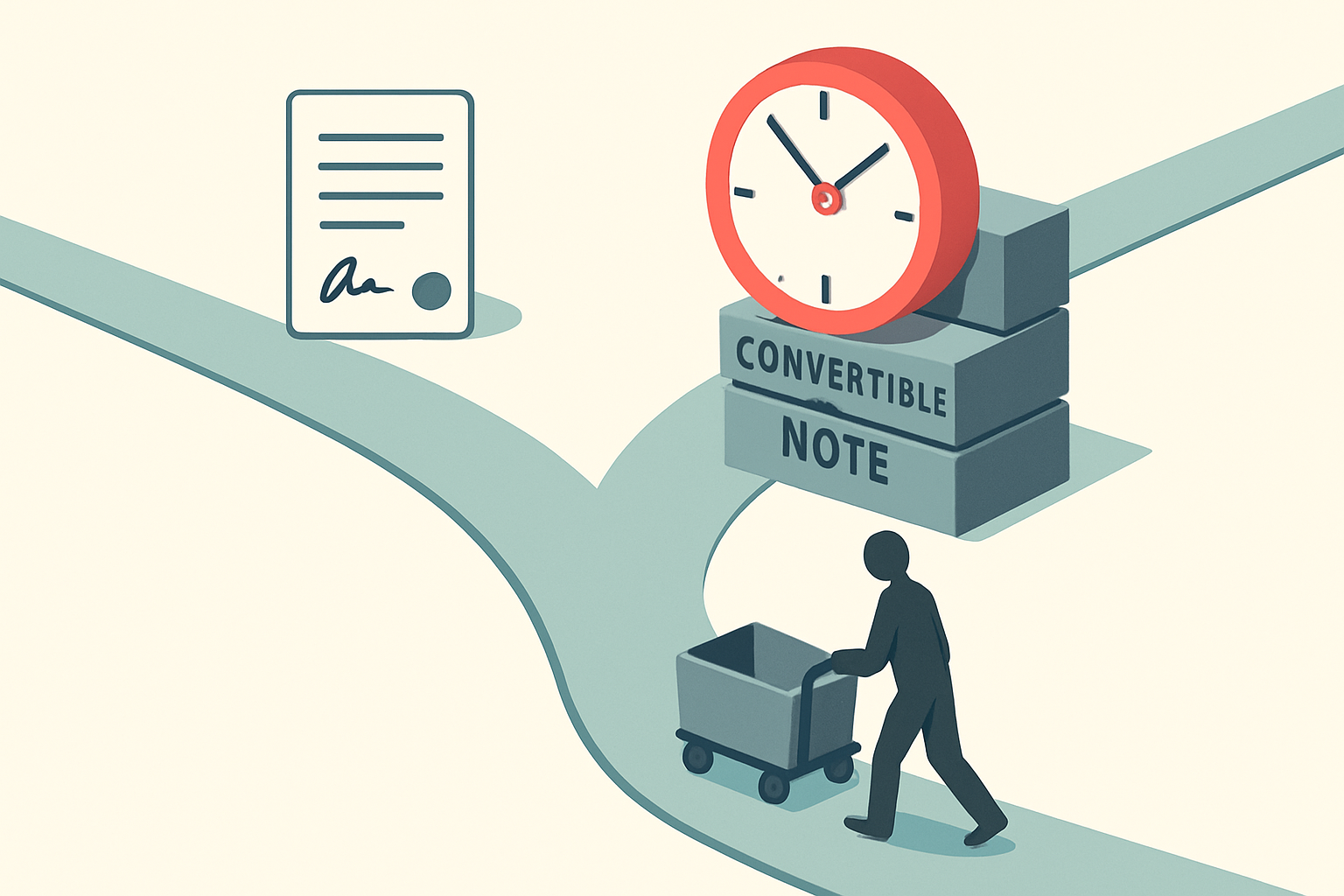
SAFE vs. Convertible Note: Leverage You Didn’t Mean to Give Away
If you’re raising a pre-seed or seed round and you’re choosing between a SAFE and a convertible note, here’s the short answer: pick a SAFE unless you want a maturity date (and the pressure that comes with it). In most venture financings, founders don’t “feel” the discount or valuation cap day-to-day. You feel the clock…
-

Convertible Note Maturity Date Terms
Convertible notes are a very common startup financing method. They typically include a maturity date, at which point the notes are, in theory, due and payable with interest. Convertible note maturity is often set 18 to 24 months after the first note investment. In practice, repayment at maturity is usually not a great outcome for…
-

Crowdfunding Should Be Used as a Last Resort
I recently wrote a commentary piece for the Dallas Business Journal regarding equity crowdfunding titled: “Here’s Why Crowdfunding Should Be Your Last Resort” I thought some of my readers would enjoy it. Some of the main take-homes from the article are: (1) It may not provide the boon of capital some predict Even if a startup is…
-

Why Seed Round Due Diligence Should Not Start Too Early
Occasionally, early-stage investors will send a startup an extensive seed round due diligence request far too early, sometimes an 8+ page list, before they’ve made any real commitment to invest. That “too early” diligence request is problematic for a few reasons. By “extensive,” I mean requests that go well beyond basic founder diligence (a pitch…
-
Startups Should Invest in a Quality Scanner
When your startup goes through due diligence for an investment round or an exit, investor’s or buyer’s legal counsel will typically send a laundry list of document requests. These documents range from the startup’s bylaws to stock option agreements to third party contracts to prior financing documents. Quite often, these diligence materials are not readily…
-
The Standard Financing Document Pipe Dream
There will never be a single standard set of financing documents, whether for seed or venture capital rounds. And interestingly, the variance in documents increases as the deals get smaller. The closest to a standard set is the NVCA forms, but those are for larger Series A/B/C type rounds. Regardless, it seems like each firm (or…
-
SAFE Seed Financing Documents
I wrote an article for LaunchDFW titled “SAFE and SOUND? A Primer on the new YC Docs”. It’s somewhat geared towards the Dallas Fort Worth startup scene, but I believe it’s probably relevant for most of the country/world.
-

Glorified Employees
Standard seed financing terms have moved well beyond the Bay Area, but they still vary by region, network, and investor experience. Most seed investors should protect their investment with reasonable governance and information rights. The problem starts when a seed investor, whether in Dallas or Denmark, treats your startup like a distressed asset and insists…
-

The Rolling Close
Unlike Series A Rounds, most seed rounds do not have every investor fund on the same date. Logistics can play a role, but the bigger driver is that many startups are still meeting, pitching, and adding angels over time while the round is already in motion. Therefore, most startups implement a rolling close structure to…
-
Price Cap Liquidation Preference Windfall Regulators
Most convertible notes have a price cap as a feature term. Depending on the delta between the price cap and the pre-money valuation of the qualified equity financing, the convertible note investors could receive a windfall in terms of liquidation preference. That is, the investor’s liquidation preference could exceed its original investment amount. The Potential…