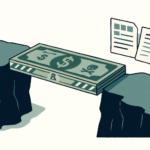
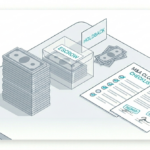
The Dallas startup scene is often described as a great environment for tech startups because of (1) the relatively low cost of living (especially compared to California or New York) and corresponding quality of life, and (2) the high number of tech jobs. Those factors absolutely make Dallas attractive to larger tech companies. But they can also create real headwinds for smaller startups, especially when it comes to recruiting and risk tolerance.
Dallas Startup Scene and “Quality of Life Units”
Other than marrying a Texan (which gets most non-Texans like myself here), people move here because the economics just make sense. Dallas is well known for the low cost of living (especially in real estate), low crime, superb public schools, competitive salaries (even higher than Los Angeles!), and the complete lack of state income tax.
To put this into perspective, when I left California in 2003 to come to Texas, I was paying $1,300 a month to rent a 500 square foot apartment outside of San Francisco, but was able to buy a 3,000 square foot house with a mortgage payment less than my California rent. Gas was $1 less per gallon and even everything at the grocery store was cheaper. I may have been making the exact same as I would have in California, but my overall “quality of life” was higher.
For simplicity’s sake, let’s say quality of life can be measured in “Quality of Life Units” or “QLUs”. Pertinent to this post, cheaper housing, less taxes, more purchasing power, better schools and lower crime leads to higher QLUs.
I’d say Dallas offers many more QLUs dollar-for-dollar relative to other areas of the country, especially the most expensive places like San Francisco or New York City. Earn $60,000 in San Francisco? Save up and maybe one day you’ll be roommate-free. That same $60,000 (or even slightly less) in Dallas gets you much more of these QLUs than in California or New York.
Influx of Jobs and Talent
Based in part upon the higher relative QLUs in Dallas, many large companies from around the country have relocated their workforces here so that they can provide their employees with a “raise” (without actually paying them more) based on the low cost of living/quality of life matrix Dallas offers. These employers are able to offer their workforce more QLUs for the same salary.
This has led to a plethora of tech jobs in Dallas and an influx of highly educated and qualified people to take advantage. These job opportunities combined with high QLUs make Dallas a very desirable place to live and work.
But if all this tech talent is here in Dallas and the costs are low, why does seemingly every startup in Dallas have a hard time finding a technical co-founder and/or CTO? Why aren’t people jumping from these large tech companies to startups?
Opportunity Cost
The answer lies in the economic concept of opportunity cost. Think about your decision to read this article. Instead, you could be checking email, doomscrolling, watching a show, taking a nap, or doing anything else. The opportunity cost of reading this article is giving up whatever activity you consider your best alternative. Because time and attention are scarce resources, every decision means passing up something else.
The opportunity cost of launching or joining a startup (full-time) is likely a good-paying job. This is true for all cities, right? But in Dallas, the opportunity cost is likely the highest in the nation because of the aforementioned QLUs. Restated, workers in Dallas making a decision to go into a startup are potentially giving up more QLUs than a similar person in California or New York. In Dallas, why risk it?
Informal Client Census
At our firm, we are blessed to have a geographically diverse client roster. For example, in Q4 2025, only 40% of our clients were in Dallas with the rest being spread across the globe. And we’ve noticed a pattern that highlights an interesting difference between our Dallas clients and non-Dallas clients. Our Dallas clients are much more reluctant to quit their day job and go “all in” (i.e. full-time) with their startup. Many of them are determined to keep their “day job” as long as possible and just work on their startup at night and on weekends. This is very different from our clients in California or New York. Even worse, once they go all in, our Dallas startup clients are quicker to give up and jump back into the corporate world.
Why is this? Are people in California or New York more determined or more passionate about their startup than those in Dallas? We don’t think so. We think Dallas startup participants give up more when participating in a startup. It’s a calculation leading to higher QLU opportunity cost which presents a higher threshold to join a startup.
Why This Can Be Bad for the Dallas Startup Scene
The high QLU opportunity cost, in my opinion, slows down each Dallas startup and in turn the entire Dallas startup ecosystem.
You and your co-founders aren’t full time? Good luck asking an investor for his or her full-time money. (And btw, saying that you’ll go full time if you get funded signals to an investor that you don’t fully-believe in your startup.)
And, furthermore, when a founder finally decides to go “all in” he or she may have trouble finding a CTO or other cofounders because they too are having the same dilemma.
It also seems like Dallas startup employees care much less about stock options and incentive equity. This makes sense as they have previously been spoiled with a high salary (QLUs again) from a large tech company.
Conclusion
The widely cited perks of the Dallas tech economy do not automatically help local startups. In many cases, they may actually make early hiring and risk-taking harder, at least until a startup can pay close to market salaries.
The issue here is that people talk about the Dallas tech industry as a whole and don’t differentiate between startups and large tech companies. Yes, Dallas is great place to get a solid tech job and a house, and raise a family. But, for an individual in Dallas, most of the time, life is too good and there is just too much to lose to launch or join a startup.
So what do you do if you are a startup in Dallas? If you can’t afford to offer market salaries (which is likely), then you should be more generous with your equity grants…from co-founders to consultants. You have to increase the upside in order to make up for the larger loss of QLUs.
What Dallas Startup founders can do
Increase upside: if you cannot pay market cash comp, consider being more generous with equity where it matters, and explain the potential outcomes clearly.
De-risk the jump: use milestones, paid pilots, or revenue commitments to reduce perceived risk for potential technical co-founders and early hires.
Be honest about timing: investors and senior hires both discount part-time execution; if you are not full time, have a credible path to get there.
Recruit from the right pools: look for people who have already taken risk (former founders, early startup employees, builders coming out of smaller firms), not only big-company engineers.
What the Dallas Startup ecosystem can do
More early risk capital: more seed funding and more consistent angel activity can make it easier for founders to go full time.
Operator networks: tighter networks between experienced operators and early startups can reduce the friction of matching talent to teams.
Celebrate startup outcomes: visible success stories help normalize risk-taking and make equity feel more real to candidates.
And before I get hate mail, let me be clear: I think Dallas is a great place to launch a startup; Dallas startups are underfunded; there is no material difference in the quality of founder CEOs here in Dallas versus California or New York. This post simply details a view that the reasons often cited for why Dallas is great for startups may, at least initially, be hampering them.
Ryan RobertsStartup Lawyer
Ryan Roberts is a startup lawyer at Roberts Zimmerman PLLC with more than two decades of experience advising startups and venture capital investors. He is the author of “Acceleration” and StartupLawyer.com.